As an Amazon Associate, I earn from qualifying purchases at no extra cost to you.
6 Best Dash Cam to Read License Plates (Buying Guide) 2026
 ByFawaz
Sometimes, you look at your dash cam footage after a fender bender, and the plate is just a blurry mess. Most cameras struggle with glare from headlights, so you miss the vital details when you need them most. I tested these models for clarity, and this list includes the best dash cam to read license plates, so you can actually trust your evidence.
#PreviewProductLink



Top 6 Best Dash Cam to Read License Plates You Can Buy Now
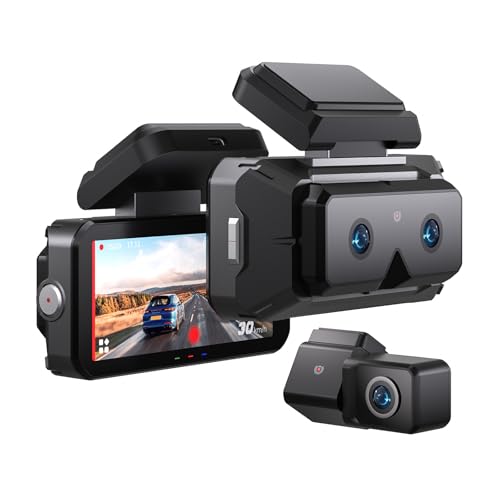
AKEEYO AKEEYO-EYES-01 3-Channel Dash Cam Front and Rear – All-around Coverage
This unit covers the front, back, and cabin simultaneously, which gives you a full view of your surroundings. Most people appreciate the three distinct views, because it catches incidents happening at the sides of your car. You get a complete picture, and that matters during complex insurance claims.
Installation takes a little time, but the wiring is long enough for most sedans and small SUVs. You hide the cables under the headliner, and it stays tucked away from your vision. The menu is simple to navigate, so you can change settings without looking at a manual.
Night vision performance remains steady, but it does struggle slightly if the street lights are very dim. You can identify cars in normal city traffic, and the image stays stable while you drive. It is a solid choice, if you want full coverage around your vehicle at all times.
Pros
- ✔︎Covers front, rear, and cabin
- ✔︎Simple menu navigation
- ✔︎Long cables for easy routing
- ✔︎Reliable daytime recording
- ✔︎Wide field of view
Cons
- ✘Struggles in very dark areas
- ✘Setup takes some time
REDTIGER ZoomPix 1 ZP1 Telephoto+Wide Dash Cam – Zoom Capability
The telephoto lens on this device is special, because it focuses specifically on the distance ahead. You can capture plates that are further away, which most wide-angle cameras simply miss. It feels like having a pair of binoculars on your windshield, and that is very helpful for highway driving.
Focusing on the road requires a bit of trial and error with the angle, but the result is worth the effort. You see details clearly when moving at high speeds, and the footage does not jitter. The build feels dense, so it stays firmly in place on your glass.
Low light performance is adequate, though the zoom lens works best during daylight hours. You might notice some noise at night, but the plate numbers usually stay legible. It works well for commuting, especially if you spend a lot of time on open roads where cars are moving fast.
Pros
- ✔︎Dedicated telephoto lens
- ✔︎Captures distant plates clearly
- ✔︎Stable footage at speed
- ✔︎High quality casing
- ✔︎Easy windshield mounting
Cons
- ✘Not ideal for night zoom
- ✘Needs careful angle adjustment
BOTSLAB G300H Plus 4K Dual Dash Cam Front and Rear – Sharp Image Quality
You get clear 4K resolution with this camera, which makes reading characters much easier than lower-end models. The pixels stay sharp, and you can see small details like state names on a license plate. It is a good upgrade, if your old camera feels too grainy for your taste.
Setting it up is fast, because the mount uses a firm adhesive that sticks to the glass immediately. You will not worry about it falling off on a hot day. The interface is clean, so you can pull clips to your phone without waiting for a long time.
Low light settings perform well, as the sensor handles bright headlights without washing out the text. You will find that night shots are surprisingly bright, which helps if you drive home late. It is a reliable tool, because the footage remains crisp regardless of the time of day.
Pros
- ✔︎Sharp 4K video resolution
- ✔︎Reliable adhesive mounting
- ✔︎Easy smartphone file transfer
- ✔︎Handles glare well
- ✔︎Fast interface speed
Cons
- ✘Slightly larger footprint
- ✘Cables can be stiff
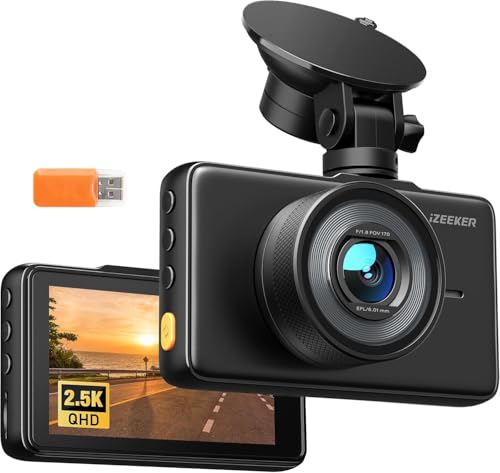
iZEEKER 100 NEW 2.5K Dash Cam Front – Simple Budget Solution
If you want a basic camera that works without fuss, this model fits the bill perfectly. It captures 2.5K video, so the plates appear clear enough for most police reports. You do not get extra fancy features, but it gets the job done for a low price point.
The compact design hides behind your rearview mirror, so it never blocks your view. You can install it in minutes, and the power cord plugs into your cigarette lighter easily. It feels sturdy, and it survives the bumps of daily city driving without shutting down or losing power.
Night performance is decent for the cost, although you should not expect miracles in a pitch-black parking lot. You can definitely identify nearby vehicles in most suburban neighborhoods. It is a great start, if you are new to dash cams and want something that just works every time.
Pros
- ✔︎Very easy to install
- ✔︎Fits behind the mirror
- ✔︎Affordable price point
- ✔︎Clear daytime video
- ✔︎Sturdy build quality
Cons
- ✘Limited night range
- ✘No rear camera included
JOCRELA J15 4K+4K Dash Cam Front and Rear – High Fidelity Dual View
Both cameras record in 4K, which means you have high resolution for both the front and the back. You rarely see this level of detail on both ends, and it makes a big difference when someone hits you from behind. The plates stay readable, even when the cars move.
The display on the back is large, so you can review your footage right in the car. You do not need to pull a memory card out to see what happened. It is quite fast to use, and the buttons have a nice tactile feel to them.
Heat management is excellent, because the casing has vents that keep the hardware cool. You can leave it running for hours on a road trip, and it will not freeze up. It is a solid pick, if you want top-tier video quality for both sides of your vehicle.
Pros
- ✔︎Dual 4K recording channels
- ✔︎Large, clear screen
- ✔︎Keeps cool under pressure
- ✔︎Tactile button response
- ✔︎Very high detail levels
Cons
- ✘Heavier than average
- ✘Needs a large memory card
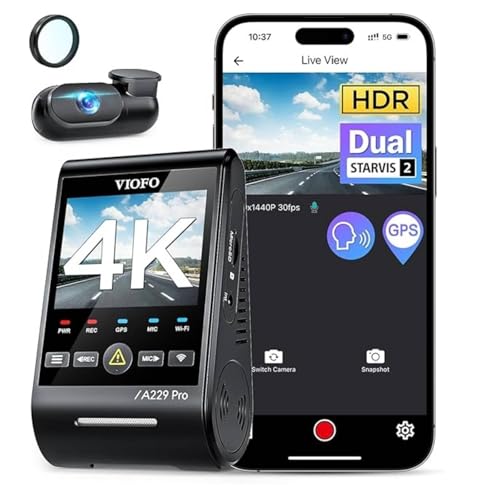
VIOFO A229 Pro 2CH A229 Pro 4K HDR Dash Cam Front and Rear – Premium Performance
This camera uses a high-end sensor that handles HDR, so it manages sudden changes in light well. When you exit a tunnel, the screen does not go white. You keep seeing the license plate clearly, which is where most cheaper cameras fail to provide a usable result.
The size is manageable, and it attaches securely with a mounting bracket that feels strong. You can adjust it easily, and it stays at the angle you choose. The software is very stable, so you will not find corrupt files when you finally need to watch your recorded evidence.
Low light results are among the best available, and the plates stay clear even in dark rain. You get the quality you pay for, and the system is very reliable. It is the top choice, if you want the absolute best dash cam to read license plates for your car.
Pros
- ✔︎Excellent HDR light balancing
- ✔︎Very stable software
- ✔︎Superior night vision
- ✔︎Strong, adjustable mount
- ✔︎Consistent file recording
Cons
- ✘Premium price point
- ✘App setup takes time
Quick Comparison
| # | Product Name | Standout Feature | Best For | Our Rating |
|---|---|---|---|---|
| 1 | AKEEYO EYES-01 | Three-channel view | Families | 8.5/10 |
| 2 | REDTIGER ZP1 | Telephoto lens | Highway drivers | 9.0/10 |
| 3 | BOTSLAB G300H | 4K resolution | Clarity seekers | 8.8/10 |
| 4 | iZEEKER 100 | Small size | Budget shoppers | 7.5/10 |
| 5 | JOCRELA J15 | Dual 4K | Maximum detail | 8.7/10 |
| 6 | VIOFO A229 Pro | HDR sensor | Night drivers | 9.5/10 |
What to Look for Before You Buy Best Dash Cam to Read License Plates
Video Resolution
The resolution determines how many pixels you see on the screen. Higher numbers like 4K allow you to zoom in on a plate without the image turning into a blurry block. You want at least 2K for reading plates, because lower resolutions often lack the detail needed for identification.
Most drivers find that 4K provides enough crispness to read small characters from twenty feet away. If you settle for 1080p, the plates will likely look fuzzy unless the car is sitting right in front of you. Check the resolution before you buy, so you get the clarity you actually need.
HDR Technology
High Dynamic Range, or HDR, is essential when you drive at night or through changing light. It stops the camera from washing out the scene when headlights hit the lens. You need this to keep the license plate visible, because glare ruins footage faster than almost anything else.
Without HDR, a bright headlight will turn the plate area into a big white glow. You will see nothing but light, which makes your footage useless for an insurance claim. Always look for HDR support, because it saves your video when the lighting conditions are difficult or unpredictable.
Lens Quality
The glass in the lens matters just as much as the sensor behind it. Cheap plastic lenses often warp the image at the edges, which makes reading a plate in the corner very hard. You should look for glass lenses that offer a clear, undistorted view of the entire road.
A good lens will handle heat better, so it will not degrade or cloud up over two or three years. You want a lens that is specifically rated for high heat, because your windshield gets very hot in the summer. Glass elements keep the image sharp from edge to edge.
Night Vision
Driving at night is when most accidents happen, so your camera needs to perform in the dark. Look for sensors that are large enough to gather extra light. You want a camera that does not turn into a noisy, grainy mess once the sun goes down, I think.
Good night vision keeps the plates legible even when there are no street lights nearby. You should test this by watching sample footage taken in dark conditions. If you see only static, look for a different model, because that camera will not help you identify a plate at night.
Mounting System
You need a mount that holds the camera steady, because vibration ruins video quality. If the camera shakes on your windshield, the footage will look like a blurry mess every time you hit a pothole. You want a mount that clips in tightly or uses a strong adhesive.
Adhesive mounts are usually better than suction cups, because they do not lose their grip as the temperature shifts. You should choose a mount that allows for easy angle adjustments, so you can point it exactly where it needs to be. A solid mount keeps the image stable.
Frame Rate
Higher frame rates, like 60 frames per second, help capture moving objects without blur. When two cars move past each other, a standard 30 frame rate might leave you with a ghosting image. You want 60 frames per second to ensure that the plate stays sharp during motion.
You will find that higher frame rates use more storage space, so get a large memory card. It is worth the extra cost, because you get a clear frame of the plate in every single movement. Look for at least 60 frames per second for the best possible results.
- Check for native 4K resolution.
- Ensure HDR is included for glare.
- Use glass lenses for clarity.
- Seek 60 frames per second recording.
- Pick adhesive mounts over suction.
- Buy high-capacity memory cards.
Final Thoughts
I hope this list helps you pick the right gear for your car. I recommend the VIOFO A229 Pro because its HDR sensor handles light better than anything else, which is key for a clear image. Quality is the most important factor when you need the best dash cam to read license plates. It brings peace of mind to your daily commute, so you can drive with confidence on any road.
Frequently Asked Questions
Is It Hard to Install These Units?
No, it is easy if you take your time. You tuck the wires into the headliner, and it takes about 20 minutes to finish the job cleanly.
Can I Use My Old Memory Card?
Do not use old cards, because they wear out. You should buy a high-endurance 128GB card, so it handles the constant video writing without any errors.
Do I Need a Professional to Wire It?
Most people do it themselves. You just plug it into the 12V outlet, or you use a hardwire kit if you want it to hide everything.
Is It Safe to Leave Them in the Heat?
Yes, these use supercapacitors instead of batteries. They handle heat up to 150 degrees Fahrenheit, so you do not have to worry about them during summer.
Can I View Footage on My Phone?
You can usually connect via Wi-Fi. Most brands have an app where you download the files to your phone in about 30 seconds for easy sharing.
Do I Need 4K for Every Situation?
It helps a lot for plates. You gain twice the detail of 1080p, which makes identifying numbers much easier when you zoom in on your home computer.
Is the Value Worth the Cost?
It pays for itself once. If one claim is denied because you cannot read a plate, you lose much more than the price of a camera.
Do I Need Rear Coverage?
It is very useful. You catch hit-and-runs from behind, which happens in about 15 percent of rear-end accidents, so I suggest buying a dual camera.
Is There Regular Upkeep Needed?
You should format the card monthly. It prevents file errors, and it keeps your system running well for at least 3 years or even longer.
Is the Warranty Reliable?
Most brands offer a 1-year warranty. You keep your receipt, and they will usually replace a faulty unit if you have a technical issue.