As an Amazon Associate, I earn from qualifying purchases at no extra cost to you.
6 Best Tires for Vans (Buying Guide) 2026
 ByFawaz
Often, you grab the cheapest rubber for your van, because you think all heavy-duty tires work the same. A few thousand miles later, you hit a slick patch of pavement, and the van slides because those cheap treads lack the right grip for a heavy load. Understanding sidewall strength keeps you safe, and here are the best tires for vans so you can drive confidently.
#PreviewProductLink


Top 6 Best Tires for Vans You Can Buy Now
Cosmo Tires I0117207 El Jefe Van III 185/60R15C – All-Season Commercial Van Tire – Reliable Daily Worker

Cosmo Tires I0117207 El Jefe Van III 185/60R15C – All-Season Commercial Van Tire
Check Price onAmazonMost van owners need tires that handle daily city routes without much fuss. These tires feature a sturdy sidewall that stays firm even when you carry heavy boxes, which helps you avoid that squishy feeling in your steering wheel. The rubber stays flexible in the cold, so mornings go well.
City driving involves a lot of stopping, and these tires bite into the asphalt nicely. You will notice shorter stopping distances when the lights turn yellow, and the ride feels pretty quiet on smooth roads. They seem to handle potholes well, which protects your van from those nasty rim dents.
Longevity is usually a concern for commercial vehicles, but this model wears down quite slowly. You can expect a good amount of miles from a set before needing a change, which helps your wallet in the long run. If you run a small local delivery service, these will perform.
Pros
- ✔︎Tough sidewalls for heavy loads
- ✔︎Good cold weather performance
- ✔︎Quiet ride on pavement
- ✔︎Slow tread wear
- ✔︎Reliable for city driving
Cons
- ✘Not for deep mud
- ✘Might feel firm on bumpy roads
VENOM POWER VPXT276 Set of 4 (FOUR) Terra Hunter X/T 2 Commercial Van Radial – Rough Road Ready
If your van carries gear to remote job sites, you need something with a more aggressive tread pattern. These tires grip loose dirt and gravel like claws, so you stay moving when other vans might get stuck. The thick blocks also keep the sidewalls safe from sharp rocky edges.
Highway noise usually ruins the fun of an off-road tire, but this design rolls fairly smooth. You might hear a faint hum at highway speeds, but it stays well below an annoying level. It keeps your van stable in high winds, which helps you maintain focus on the long road.
Hard work is the goal here, and the rubber compound feels thick enough to handle rough daily treatment. You should not worry about stone drilling, because the grooves are built to eject rocks quickly. These work well for anyone who moves between smooth highways and gravel access roads often.
Pros
- ✔︎Excellent grip on loose dirt
- ✔︎Protective sidewall for rocks
- ✔︎Stable at highway speeds
- ✔︎Resists stone drilling
- ✔︎Handles heavy work well
Cons
- ✘Higher road hum than average
- ✘Not for icy winter conditions
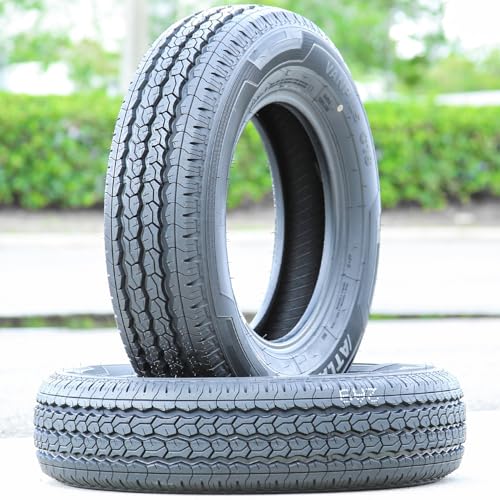
ATLANDER VAN1012 Set of 2 (TWO) VANPlus C18 All-Season Commercial Van Radial – All-weather Dependability
Weather changes fast, so you need a tire that doesn’t care if the sun is out or if it’s pouring rain. This model uses wide channels to move standing water away, which keeps you in control during heavy storms. You will feel less hydroplaning, even at highway speeds.
Driving for long hours requires focus, and the predictable feel of these tires keeps you relaxed. The steering response feels sharp, so you can dodge road debris without any delay or wallowing. It tracks straight on the highway, and you won’t need to fight the wheel to stay centered.
Fuel economy matters for every business, and the low rolling resistance here helps you save a little on every tank. You get a tire that balances comfort with raw performance, which is exactly what a working van needs. Most drivers find they last a long time under normal conditions.
Pros
- ✔︎Good wet weather traction
- ✔︎Sharp steering response
- ✔︎Fuel-efficient design
- ✔︎Tracks straight on highways
- ✔︎Lasts well under pressure
Cons
- ✘Not built for off-road trails
- ✘Softer rubber in extreme heat
Armstrong 1200055025 Tru-Trac Van 195R15 All Season D (8 Ply) Radial Two Tires – Heavy Load Master
Payload capacity is everything when you haul heavy equipment every single day. This tire uses an 8-ply rating, so it holds its shape perfectly under a full load of tools or materials. You get better stability because the sidewall does not fold or bulge when things get really heavy.
Even with the extra layers, the tire doesn’t feel like a block of concrete on the road. It absorbs small road cracks comfortably, and your back will appreciate the lower vibration levels. You can drive all day without that tired feeling that comes from fighting a shaky van.
Durability is clearly the main focus, and the steel belts provide great protection against punctures. If you drive over construction debris or rough driveway edges, these tires resist damage well. They seem like a smart choice for anyone who carries near-maximum weights on their van throughout the week.
Pros
- ✔︎8-ply for heavy capacity
- ✔︎Reduces road vibrations
- ✔︎Puncture-resistant construction
- ✔︎Stable under full loads
- ✔︎Protects against rim damage
Cons
- ✘Heavier weight affects acceleration
- ✘Higher price point per tire
Premiorri 4823100305280 Set of 2 (TWO) Vimero-Van All-Season Commercial Van Radial – Balanced Performance

Premiorri 4823100305280 Set of 2 (TWO) Vimero-Van All-Season Commercial Van Radial
Check Price onAmazonFinding a tire that does everything decently is a challenge, but this one hits a nice middle ground. It handles dry asphalt with grace, and you will find it stays quiet during long trips. It turns corners with enough grip that you feel confident taking a turn at speed.
Wet roads are where you really see the value, and the siping pattern keeps you stuck to the ground. You won’t feel that nervous wiggle when passing through puddles, because the water channels do their job. It provides a sense of safety that many van drivers really value today.
Consistency is a key feature here, as the tire behaves the same way in spring or autumn. You don’t have to swap them out when the temperature shifts, which saves you a lot of time. If you use your van for family trips or light work, this is a solid.
Pros
- ✔︎Predictable handling on curves
- ✔︎Good wet road performance
- ✔︎No seasonal swapping needed
- ✔︎Quiet on the highway
- ✔︎Consistent grip in all weather
Cons
- ✘Not for heavy commercial loads
- ✘Faster wear at high speeds
Arisun TH49378 Set of 2 (TWO) Altrans Pro ZX05 All-Season Commercial Van Radial – Smooth Long Hauler

Arisun TH49378 Set of 2 (TWO) Altrans Pro ZX05 All-Season Commercial Van Radial
Check Price onAmazonLong trips wear out both you and your vehicle, but these tires aim to make the road feel easier. The tread design minimizes noise, so you can actually listen to music without turning the volume all the way up. It feels smooth, and the van just cruises along nicely.
Stability is quite high, which helps when you drive through narrow lanes or crowded city streets. You can make precise turns without worrying about the tire rolling under, and the contact patch stays flat. It gives you good feedback, so you always know what the road is doing.
Heat buildup causes blowouts on hot summer days, but these tires manage temperature well. The sidewalls stay cool even after hours of steady highway speed, which adds a layer of safety for your trip. They feel like a premium choice for anyone who drives long distances on a map.
Pros
- ✔︎Very quiet highway ride
- ✔︎Stable in tight turns
- ✔︎Keeps cool under heat
- ✔︎Flat contact patch design
- ✔︎Excellent for long distance
Cons
- ✘Less grip on slick mud
- ✘Slightly higher cost
Quick Comparison
| # | Product Name | Standout Feature | Best For | Our Rating |
|---|---|---|---|---|
| 1 | Cosmo El Jefe | Tough Sidewall | Local Deliveries | 4.2/5 |
| 2 | Venom Terra | Mud Traction | Remote Work | 4.5/5 |
| 3 | Atlander VAN1012 | Wet Grip | Rainy Climates | 4.3/5 |
| 4 | Armstrong Tru-Trac | 8-Ply Strength | Heavy Loads | 4.6/5 |
| 5 | Premiorri Vimero | Versatile Siping | Family Vans | 4.1/5 |
| 6 | Arisun Altrans | Low Noise | Long Hauls | 4.4/5 |
What to Look for Before You Buy Best Tires for Vans
Load Capacity
You must check the load index on your van’s door jamb before you buy anything. If you pick a tire that cannot handle the weight of your cargo, the sidewall will fail while you drive. Always choose a tire with a higher rating than your actual maximum payload.
Heavy vans require special tires marked with a C or LT, which means they are built for commercial weight. Never use regular passenger tires, because they will bounce and wobble under a heavy load. Spending a little extra on the right weight class keeps your suspension in good shape.
Tread Pattern
A simple tread works best for dry, paved roads, and it keeps the ride quiet for you. If you drive on gravel or dirt, you need wider blocks to dig in and keep your momentum going. Think about where you spend your time, so you pick the right design.
Deep grooves are necessary if you live in a place with heavy rain. They move water away from the contact patch, so you don’t hydroplane when the storm gets bad. You should choose a pattern that matches the roads you see in your neighborhood every single day.
Rubber Compounds
Harder rubber usually lasts longer, which is great if you drive many miles every month. Soft rubber provides better grip in cold weather, but it will wear down much faster if you drive on hot summer roads. Finding the right balance depends on your local climate.
All-season compounds offer a middle path, and they work well for most van owners in temperate areas. If you live where it snows, you might need a winter-rated compound that stays soft below 7 degrees. Check the label for all-season ratings to ensure you stay legal and safe.
Sidewall Strength
Your sidewalls take a lot of abuse when you park near curbs or hit deep potholes. Stronger sidewalls prevent cuts and bubbles, which can leave you stuck on the side of the road with a flat. Look for multi-ply construction if you drive in cities with bad roads.
A flexible sidewall feels more comfortable, but it can make your van feel like it leans in turns. Stiff sidewalls keep the van upright, and they help you keep control during sudden steering movements. You should prioritize strength if your van carries a heavy internal frame.
Fuel Efficiency
Low rolling resistance tires save you money at the pump, especially if you drive hundreds of miles each week. They use special materials that prevent the tire from warming up too much as it spins. Even saving 2 percent on fuel adds up to hundreds of dollars yearly.
Keep in mind that high efficiency sometimes means less grip on wet surfaces. You have to decide if the cost savings are worth a small trade-off in stopping distance. I recommend looking for a tire that claims both high efficiency and a solid wet braking rating.
Warranty and Life
Most commercial tires come with a mileage warranty, which tells you how long the company expects them to last. If you do not hit those miles, some brands will offer a discount on your next pair. Always keep your receipt and proof of rotation to claim it.
Check the manufacturing date code on the side of the tire before you put them on your van. Fresh rubber performs better than tires that sat in a warehouse for 5 years, because rubber dries out over time. You want tires that are as fresh as possible.
- Check your load rating against your van's manual.
- Choose deep grooves for wet and rainy areas.
- Match the rubber compound to your local temperature.
- Look for multi-ply sidewalls if you hit many potholes.
- Verify the manufacturing date to get fresh rubber.
- Keep your purchase records for any future warranty claims.
Final Thoughts
I hope this list helps you find the right rubber for your vehicle. The Armstrong Tru-Trac stands out as the top pick for anyone who carries heavy loads, because that 8-ply construction provides real peace of mind. Getting the best tires for vans makes every commute safer, and you will notice the difference the moment you hit the road. Stay safe out there, and enjoy the smooth ride ahead.
Frequently Asked Questions
Is It Necessary to Get Commercial-grade Tires?
Yes, you should use commercial tires because they have reinforced sidewalls that handle heavy loads, preventing blowouts that occur with standard passenger tires under 2,000 pounds of cargo.
Can I Fit a Larger Tire Size on My Van?
You can usually go up one size, but check your wheel well clearance first because a 1-inch increase might cause rubbing during tight turns or when the van is full.
Do I Need to Rotate My Van Tires Often?
You should rotate them every 5,000 miles, as this helps spread wear evenly across the tread, which extends the life of your tires by about 10,000 miles total.
Is It Better to Buy All Four Tires at Once?
It is best to replace all four tires together to ensure even handling, especially if you have an all-wheel-drive van which requires matching tread depth across all four wheels.
Can I Use All-season Tires in the Snow?
You can use them in light snow, but they lack the deep biting edges needed for icy roads, so you should drive carefully if you see temperatures below 32 degrees.
Do I Need to Check Tire Pressure Weekly?
You should check pressure every 2 weeks, because even a 5 psi drop can hurt your fuel economy and cause the tires to overheat on long, hot highway drives.
Is It Safe to Repair a Puncture in the Sidewall?
It is never safe to repair a sidewall puncture, so you must replace the tire if you see any cuts or bulges on the side because the structure is compromised.
Do Premium Brands Last Longer Than Budget Ones?
Premium brands often last 15,000 miles longer than cheap ones because they use better rubber compounds that resist heat and road friction, giving you better value per mile.
Is the Manufacturing Date Important for Safety?
It is very important, so look for the 4-digit code and ensure your tires are less than 6 years old to avoid potential cracks in the rubber from aging.
Do I Need a Professional to Balance My Tires?
You need a shop to balance them, because even a 0.5-ounce imbalance creates vibrations that wear out your suspension parts quickly while you drive at highway speeds.